
How to Tell a Date About Your Disability
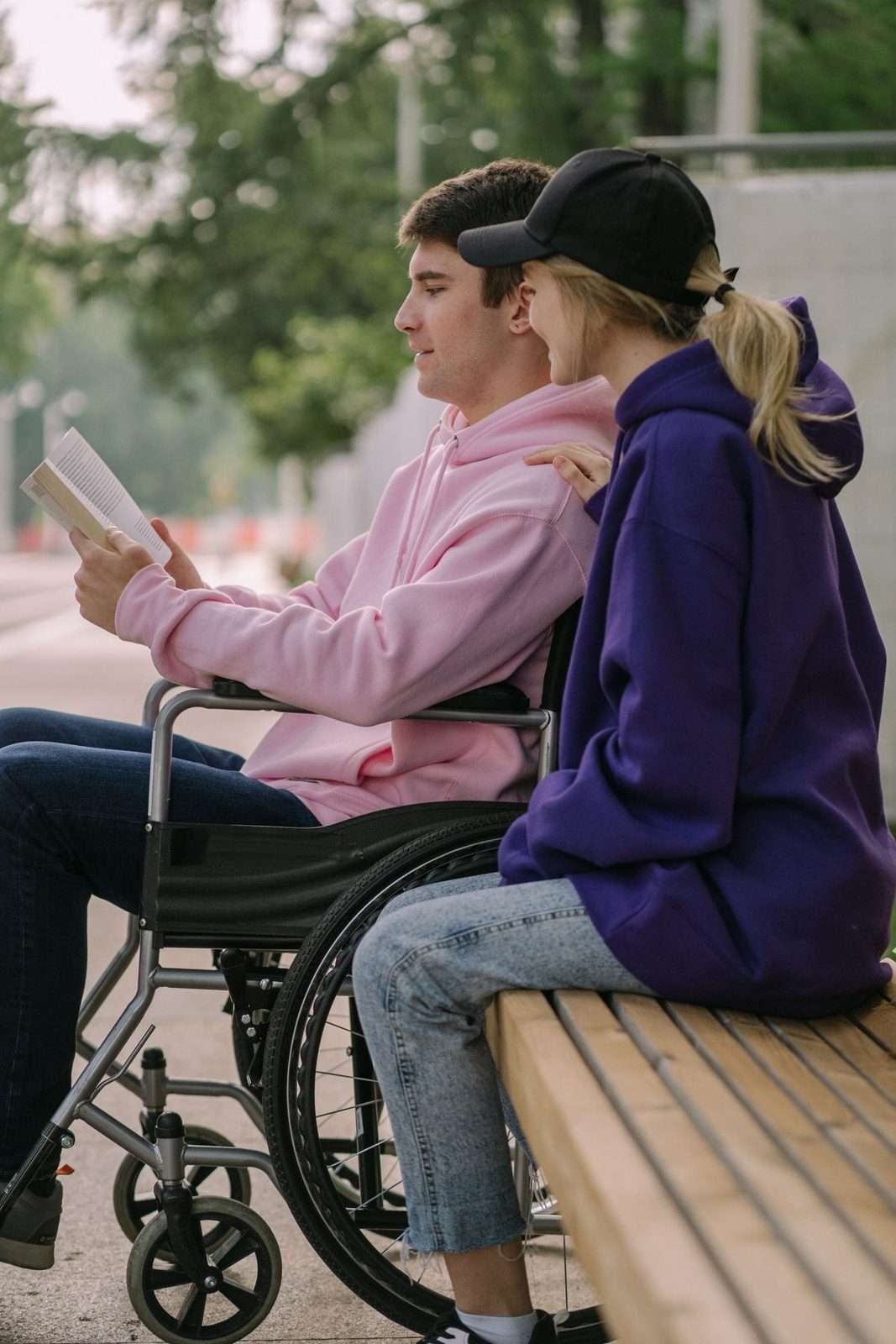
Telling someone about your disability does not have to be a confession or a speech. At its best, it is simply sharing a fact about your life, the same way you might mention that you have two sisters or that you work nights. The words you choose, and the tone you use, shape how the conversation goes. The focus here is the how: the wording, the access conversation and handling what comes next. If your main question is when to bring up a hidden condition, our article on dating with an invisible illness looks at timing in depth.
Start with what you want them to know
Before you say anything, think about what actually matters for this person at this stage. A first date does not need your full history. Ask yourself:
- What will affect our time together?
- What might they notice or wonder about?
- What do I want them to understand about me?
That usually narrows things to two or three sentences. Everything else can come later, if and when you want to share it.
A simple structure
Many people find a three-part shape helpful:
- The fact. Name it plainly. "I'm a wheelchair user." "I have MS." "I'm autistic."
- What it means day to day. Keep it practical. "I need venues with level access." "I get tired by the evening." "Loud places overwhelm me."
- An invitation. "Ask me anything you're curious about." Or, if you prefer, "Happy to talk more about it another time."
Put together: "I have cerebral palsy, which affects my walking and sometimes my speech. I get around fine, I just need places without lots of stairs. Ask away if you're curious."
Words you can borrow
Adapt any of these to suit you.
- Matter-of-fact: "A bit of context: I use a wheelchair, so I'll pick somewhere with no steps."
- Light-hearted: "Fair warning, I'm Deaf, so you'll need to face me. Upside: I'm brilliant at reading body language."
- Open: "I have bipolar disorder. Things are stable for me right now, and I'd rather you ask than wonder."
- Brief: "I have a chronic condition. It's managed, and I'll tell you more when we know each other better."
- Practical: "I'm partially sighted, so could we meet at the station entrance? It's easier for me to find you."
None of these apologise. You are not asking for permission to be disabled. You are giving useful information.
The access conversation
For many disabled daters, the real conversation is not about diagnosis at all. It is about access: what you need for the date to work. Framing it this way often feels easier for both of you, because it turns a personal topic into a shared plan.
Lead with the plan
Instead of "I'm disabled, is that OK?", try "I know a great café with level access near the river. Fancy meeting there on Saturday?" You have shown what you need without making it the headline.
Say what you need, not what you cannot do
"I need somewhere I can sit" lands differently from "I can't stand for long". Both are true. The first invites your date to help solve it.
Be specific
Vague requests lead to guesswork. "Somewhere accessible" can mean anything. "Level entrance and an accessible toilet", "a quiet corner with good lighting" or "a short walk from the bus stop" gives your date something they can actually check.
Share the work
If your date offers to choose, you can send a couple of options that you know work. Or say: "You pick, but could you check they have a ramp?" Our guides to affordable accessible date ideas and wheelchair accessible date ideas are full of starting points.
Writing it versus saying it
Messaging gives you time to choose your words, and lets your match react privately before you meet. Saying it in person lets them see your face and hear your tone, which can make it feel warmer. Neither is better. Some people mention access needs in messages and leave the personal side for face-to-face. Choose whatever feels least stressful for you.
Handling questions
Once you have told someone, they may have questions. Some will be thoughtful, some clumsy. A few approaches:
- Answer what you are happy to answer. "I was born with it" or "It started in my twenties" can be plenty if you do not want to go further.
- Set a boundary kindly. "I'd rather not get into the medical side yet, but I'm happy to talk about how it affects day-to-day life."
- Redirect. "That's a longer story. Tell me about your job first."
- Correct gently. If they use outdated language, you might offer the term you prefer: "I usually say 'wheelchair user'. It's a tool I use, not something that holds me back."
You are not obliged to educate anyone. But a little patience with genuine curiosity can lead somewhere good.
What a good response sounds like
How your date reacts matters more than how perfectly you phrase things. Encouraging signs include:
- they thank you for telling them
- they ask what would help
- they treat it as one part of you, not the main topic
- they remember what you said next time
Warning signs include:
- they become overly interested in your disability, especially in a sexual way
- they praise you for ordinary things, as if going out for a drink were a heroic act
- they suggest you should be grateful they are dating you
- they ignore your access needs or argue with them
That last group tells you to move on. Our article on devotees and red flags in disabled dating covers unusual levels of interest in detail.
If it goes badly
Sometimes a match goes quiet after you tell them. It hurts, but it is information. Someone who leaves because of your disability was never going to be a good partner, and finding that out early saves you time. Talk to a friend, look after yourself, and try again when you feel ready. On a site built for disabled dating, you are far more likely to meet people who take it in their stride.
Telling a disabled date about your own disability
On Disabled Contacts UK, many people you meet will also be disabled. That can make the conversation easier, because they have been there. It can also bring new questions: how do our needs fit together? A wheelchair user and someone with sensory processing needs might need to find venues that work for both. Be just as clear and specific. "I need level access, and you need quiet. Let's find somewhere that does both."
Practise if it helps
Saying the words out loud, to a mirror or a friend, can take the edge off. Some people write a short paragraph they reuse and adapt. Over time, most people find the conversation becomes routine.
Staying safe
Sharing details of your disability can, rarely, attract people with bad intentions. Keep medical details general until you know someone, never share information about your benefits or finances, and be cautious of anyone who wants to know where you live or who helps you. Read our Trust and Safety page for more.
Frequently asked questions
What should I say when telling a date about my disability?
Keep it short: name it, explain what it means day to day, and invite questions if you are happy to answer them. For example: "I'm a wheelchair user, so I need places with no steps. Ask me anything."
How do I talk about access needs on a date?
Lead with a plan rather than a question, say what you need rather than what you cannot do, and be specific, such as "level entrance and an accessible toilet".
Do I have to answer every question about my disability?
No. Answer what you are happy to, set boundaries kindly and redirect if you would rather talk about something else.
What if they stop replying after I tell them?
It hurts, but it tells you they were not the right person. On a site built for disabled dating, you are more likely to meet people who take it in their stride. Ready to start the conversation? Signup Here or Sign in.